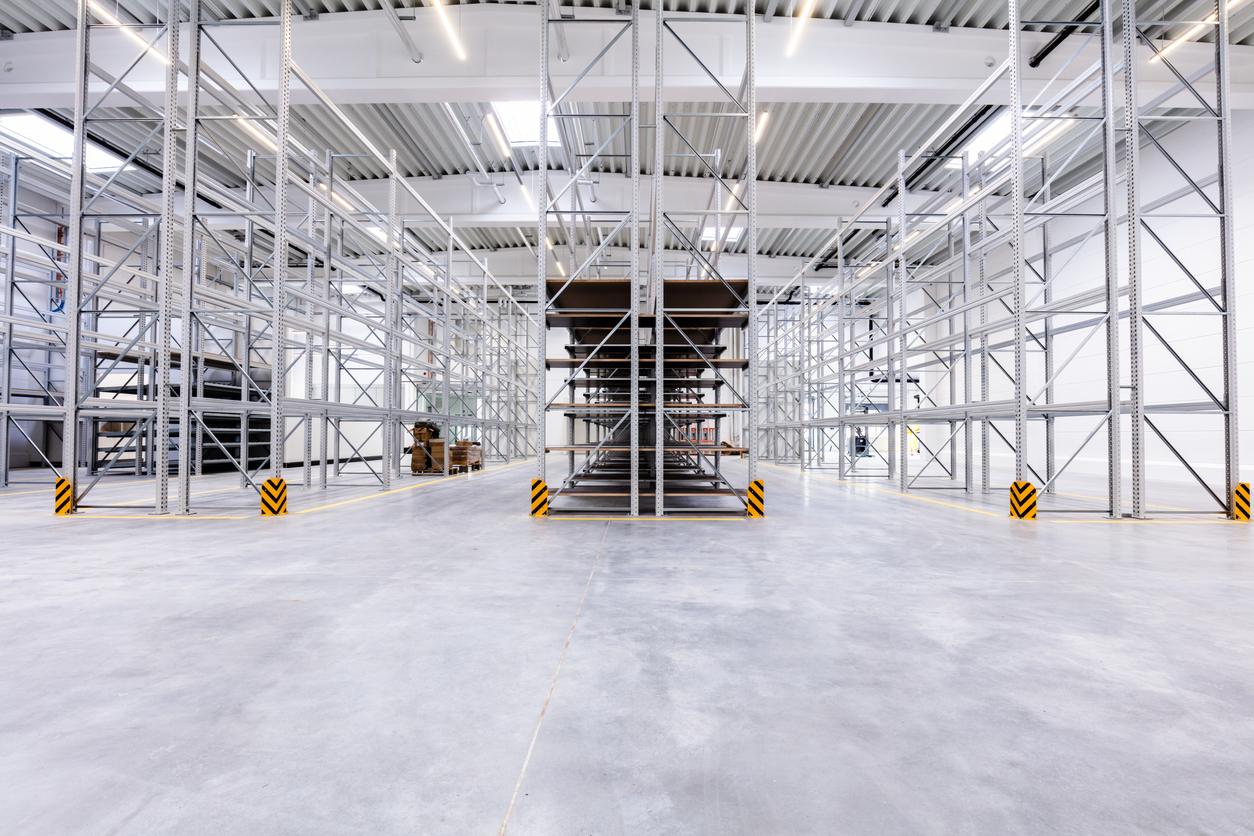
In a warehouse setting, getting the most optimal warehouse storage solution to work is easier said than done. Basically, heavy duty cantilever racking is designed specifically to work with products like steel beams, lengths of timber, pipes, and any other long awkward items. Cantilever racking is designed with simplicity in mind. There are other forms of racking with vertical uprights, but cantilever relies on a single column with arms.
If you can picture a series of heavy duty shelves, cantilever racking is just like this but with nothing at the front to obstruct the loading and retrieval of stock.
Cantilever racking system is designed to efficiently hold long, heavy items, but it is the absence of front supports that counts the most. Loading a six-metre steel beam onto standard racking is usually more trouble than it is worth. Just cutting it down to load it is impractical and wasteful. However, loading it onto long arms with a front facing forklift is an easy process that saves time across hundreds of daily operations.
An Overview of Load Dynamics
More complex Load Dynamics Engineering designs exist to accommodate the greatest weights; for instance, arm designs that can carry 500kg, or, depending on the specifications, several tonnes. Engineering at this level requires a specific skill set, since the cantilever principle integrates a significant leverage effect, placing further emphasis on the support structure as the load increases on a column.
Addressing this issue requires quality systems that incorporate a balanced combination of factors, including: the arm’s design depth, the grade and gauge of steel, and most importantly, the design of the base. Increased weight capacities demand longer bases or floor attachments that stabilize the base to prevent the tip-over forces that are created when the load is applied to the arm of the system. Anyone specifying these systems needs to be honest about maximum loads and the way these loads will be distributed across the arms.
Single-Sided and Double-Sided Configurations
In terms of space planning, the choice between single and double-sided racking is often a question of efficiency. While single-sided units can sit in front of walls and protect the back, double-sided set ups create aisles between two rows of arms extending from a central column. In this way, double-sided designs can effectively double the storage density of a design. Double-sided systems have specific aisle width considerations. Aisle space needs to accommodate your handling equipment, while also providing enough clearance for larger loads to complete wider turns, as they require wider turning radii. A six-metre pipe needs considerably more manoeuvring room than a two-metre one. If not enough aisling space is calculated, stock can get damaged and people can get frustrated, so consider aisle width space requirements.
Arm spacing is an important factor as well. Flexible materials, for example an aluminium pipe or plastic section, will require smaller spacing between the arms to stop material sag. With rigid materials like steel a greater distance can be used. This is an important factor for safety. Flexible materials can get damaged by sagging and create safety concerns where materials might get stuck under their own weight.
Making the right choice
Don’t be hasty in deciding what kind of heavy duty cantilever racking to buy. While the initial cost of racking is high, the productivity gains are likely to be even more significant. However, if productivity loses have to be accounted in, racking is a worthwhile expense. Make sure to assess more than just your current storage needs and work along suppliers who do not just quote what you desire, but are willing to ask clarifying questions in order to better understand your needs.
It is always more ideal to have a system tailored to the operational needs than to have the operation system moulded to fit around the equipment.